Autonomous agents that execute cross-system workflows — not just another chatbot
AI Agent Platform
Replace manual, multi-system workflows with AI agents that plan, execute, and report — with human-in-the-loop guardrails for every sensitive operation


Autonomous execution within strict guardrails
Every tool an agent can invoke is pre-registered in a capability manifest with explicit permission boundaries. Function Calling is scoped by role — different users expose different tool sets. Sensitive operations (financial writes, external notifications, data mutations) trigger a human-in-the-loop approval flow before execution. All actions are logged with full trace IDs, timestamps, and rollback metadata. When something fails, the system surfaces structured error context and compensation options — it never silently modifies production data.
Manual workflows are burning engineering hours and creating risk
Your team spends hours every day on tasks that follow clear, repeatable patterns: pulling data from System A, transforming it, pushing it to System B, notifying stakeholders, and logging the result. These aren't edge cases — they're core operational workflows that are ripe for agentic automation. The question isn't whether to automate, it's how to do it safely.
Repetitive tasks consume your best people
Form filling, data aggregation, status updates, and report compilation eat hours every day without creating differentiated value. Your engineers and analysts spend their time on mechanical execution while strategic work — architecture decisions, customer insights, process improvements — gets perpetually deprioritized.
Manual data transfer across systems introduces errors
A single workflow touches CRM, ERP, ticketing, and communication tools — requiring the same data to be entered multiple times. Copy-paste errors, format mismatches, and missed fields are inevitable. By the time inconsistencies surface in downstream reports, they've already impacted decisions.
Approval chains break under real-world conditions
After a request is submitted, progress depends on manual routing and follow-up. Nobody knows where it's stuck until someone escalates. PTO, travel, and team transitions break the chain entirely. Urgent requests sitting in someone's inbox for days is the default, not the exception.
Report consolidation is painful and error-prone
Weekly and monthly reports require pulling data from multiple backends, spreadsheets, and communication threads, then manually reconciling formats and metrics. Half a day goes to number alignment alone — and there's still no guarantee the totals are correct.
Complex Business Rules Defeat Rule-Based Automation
Real workflows contain exception branches and judgment calls that rigid RPA engines can't handle. Every edge case requires manual override, eroding automation ROI.
Multi-System Access Without Auditability Is a Security Risk
Agents touching multiple internal systems require fine-grained permission scoping and immutable audit logs. Without these controls, compliance posture is untenable.

Agentic workflows that plan, execute, and verify autonomously
Our AI Agents use LLM orchestration with ReAct-style reasoning to decompose complex instructions into executable steps. The agent determines which tools to call and in what sequence via Function Calling, executes each step, observes the result, and adapts. Critical operations always require human confirmation. Every execution path is logged end-to-end with full observability.
Cross-system orchestration via Function Calling
The agent dynamically selects and sequences API calls based on user intent — collapsing workflows that previously required manual context-switching between CRM, ERP, ticketing, and communication tools into a single natural language command.
Structural error reduction through automation
Every step is executed programmatically against predefined schemas with built-in validation. Data consistency checks run at each checkpoint, eliminating the missed fields, format errors, and version confusion inherent in manual data transfer.
Reclaim engineering time for high-leverage work
Delegate data aggregation, status polling, notification dispatch, and report generation to the agent. Your team redirects cognitive bandwidth to architecture, customer problems, and strategic initiatives that require human judgment.
Natural language interface for complex operations
No need to learn five different system UIs or remember API endpoints. Describe what you need in plain English — the agent uses ReAct reasoning to decompose it into concrete steps, execute them sequentially, and report results.
Plugin-based integration with any system
Slack, Teams, Jira, Salesforce, SAP, custom ERPs — the agent connects through standard REST/GraphQL APIs via a tool registry. New integrations are added as plugins with zero changes to the core orchestration layer.
End-to-end execution observability
Every tool invocation is logged with trace IDs, timestamps, input/output payloads, and execution duration. Issues can be traced to root cause in seconds. Audit compliance is built in from day one — no retrofitting required.
Building production-grade agentic automation with safety by design
We follow a six-phase delivery model: Discovery, Design, Integration, Build, Validate, Operate. Each phase produces clear deliverables with defined acceptance criteria. Automation rules are signed off by both parties before execution begins, and critical operations retain human-in-the-loop checkpoints throughout the system's lifecycle.
Process Discovery & Prioritization
We map your operational workflows, identify the highest-volume repetitive tasks, and assess automation feasibility for each. The output is a prioritized automation roadmap ranked by impact, complexity, and risk — so you deploy agents where they deliver the fastest ROI.
Process Discovery & Prioritization
We map your operational workflows, identify the highest-volume repetitive tasks, and assess automation feasibility for each. The output is a prioritized automation roadmap ranked by impact, complexity, and risk — so you deploy agents where they deliver the fastest ROI.
Workflow Design & Guardrail Definition
For each target workflow, we define trigger conditions, execution steps, branching logic, and exception handling. Which actions require human approval, when to pause, what constitutes a failure state — everything is documented in a workflow spec and signed off before development starts.
Workflow Design & Guardrail Definition
For each target workflow, we define trigger conditions, execution steps, branching logic, and exception handling. Which actions require human approval, when to pause, what constitutes a failure state — everything is documented in a workflow spec and signed off before development starts.
System Integration & Tool Registration
We connect the agent to your existing systems — CRM, ERP, ticketing, communication platforms — via standard APIs. Each integration is registered as a tool in the agent's capability manifest with defined input/output schemas. Integration is non-invasive; your existing systems continue to operate normally.
System Integration & Tool Registration
We connect the agent to your existing systems — CRM, ERP, ticketing, communication platforms — via standard APIs. Each integration is registered as a tool in the agent's capability manifest with defined input/output schemas. Integration is non-invasive; your existing systems continue to operate normally.
Agent Build & Orchestration Logic
We implement the agent's reasoning and execution logic based on the confirmed workflow specs. This includes Function Calling chains, ReAct loops, state management, and monitoring dashboards. Human-in-the-loop checkpoints are wired into every sensitive operation path.
Agent Build & Orchestration Logic
We implement the agent's reasoning and execution logic based on the confirmed workflow specs. This includes Function Calling chains, ReAct loops, state management, and monitoring dashboards. Human-in-the-loop checkpoints are wired into every sensitive operation path.
Pilot Deployment & Validation
We start with one or two high-frequency scenarios in a controlled rollout. Execution logs, error rates, and user feedback are collected and analyzed in real time. Once workflows are stable and accuracy is confirmed, we expand to additional scenarios incrementally.
Pilot Deployment & Validation
We start with one or two high-frequency scenarios in a controlled rollout. Execution logs, error rates, and user feedback are collected and analyzed in real time. Once workflows are stable and accuracy is confirmed, we expand to additional scenarios incrementally.
Production Launch & Continuous Optimization
Post-launch, we monitor agent health metrics, tune workflow parameters based on usage patterns, and expand capabilities based on your evolving needs. Every action remains fully logged for audit. The system improves continuously through feedback loops and execution analytics.
Production Launch & Continuous Optimization
Post-launch, we monitor agent health metrics, tune workflow parameters based on usage patterns, and expand capabilities based on your evolving needs. Every action remains fully logged for audit. The system improves continuously through feedback loops and execution analytics.
From manual orchestration to autonomous workflow execution
AI Agents excel at clearly defined, multi-step workflows that span multiple systems. These six scenarios represent the highest-impact deployments in enterprise environments — all with human-in-the-loop confirmation for sensitive operations.
Cross-System Data Retrieval & Reconciliation
Staff spend hours switching between internal tools to check statuses and compile information — one missed step blocks the entire workflow. The AI agent links authorized systems, consolidates statuses into a single view, surfaces pending items, and flags discrepancies explicitly rather than silently passing them through.
Automated Reporting & Analytics
Weekly and monthly reports depend on each team manually pulling and assembling data before deadlines — any format change means starting over. With data sources and templates defined, the agent generates report drafts on schedule. Stakeholders review and approve before distribution.
Approval Workflow Acceleration
Approvers struggle to review lengthy request histories, and drafting standard responses is tedious. The agent auto-generates summaries from ticket records and drafts approval language following organizational conventions. All drafts require human sign-off before submission — signatures and co-approval chains remain in your existing systems.
Internal Task Orchestration
Cross-functional tasks involve collection, review, data entry, and archival — tracking progress via chat threads is chaotic. The agent advances tasks step by step, sends deadline reminders to the next responsible party, logs every state transition, and provides analytics on cycle time per stage.
Data Reconciliation & Anomaly Detection
At month-end, business and finance teams export records for manual comparison — boundary discrepancies are easy to miss. The agent auto-matches on key fields, generates difference reports with probable root causes, and surfaces only anomalies for human investigation. Reconciliation logic is standardized and version-controlled.
External Partner & Vendor Coordination
Syncing statuses and confirmations with external partners via email is slow and inconsistent. With controlled API access on both sides, the agent periodically fetches data and generates delta reports. Operations involving confidential data or financial transactions still require explicit human approval — external coordination stays controlled.
Every automated action is secure, scoped, and fully traceable
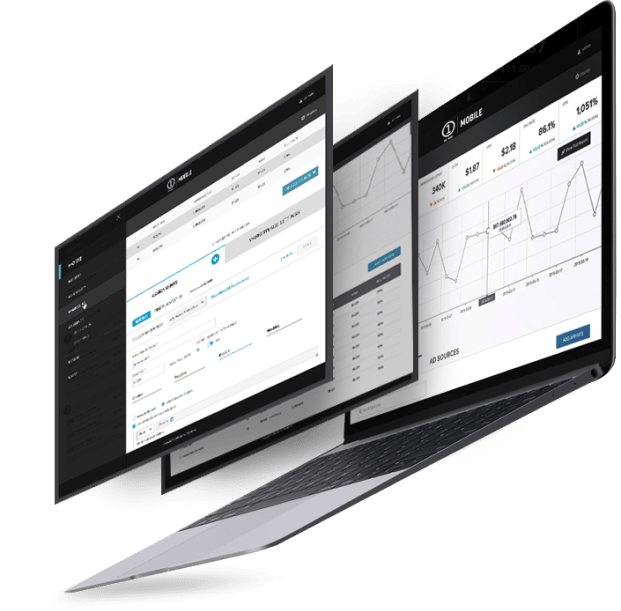
Generic RPA and low-code platforms offer template-based automation with limited adaptability. A custom-built AI Agent delivers measurable engineering advantages in permission isolation, operational safety, integration depth, and evolvability — ensuring automated workflows are secure, compliant, and built to scale with your organization.
Non-Invasive, API-First Integration
The agent interacts with your business systems exclusively through reviewed, standard APIs — never touching production databases directly. Core system data integrity and business logic remain unaffected. Clear separation between the integration layer and business layer makes troubleshooting and rollback straightforward.
Role-Scoped Permissions & Operation Isolation
Role-based access control defines exactly which tools each role can invoke, operation rate limits, and data visibility scope — all independently configured. A centralized policy engine manages rules while a gateway layer enforces them. Unauthorized operation attempts are automatically blocked and logged to the security audit trail.
Human-in-the-Loop for High-Stakes Operations
For actions involving financial mutations, external notifications, or data deletion, the agent generates a pending execution plan — not a completed action. Execution requires explicit human approval. Multi-level co-signing workflows are supported, balancing automation throughput with compliance requirements.
End-to-End Distributed Tracing
Every cross-system call carries the business primary key, trace ID, and operator identity, all written to centralized, structured logs. Supports multi-dimensional search by workflow instance, time range, and operation type — meeting both internal audit and external compliance requirements for full activity traceability.
Structured Exception Handling & Auto-Compensation
Built-in error classification and recovery strategies for timeouts, validation failures, and downstream outages. Idempotent operations support automatic retry with exponential backoff; non-idempotent operations pause and escalate to humans — ensuring data consistency is preserved at every step in the chain.
Evolvable, Plugin-Based Architecture
The agent's tool registry follows a plugin architecture — adding or modifying system integrations requires configuration changes, not orchestration refactoring. Permission policies, workflow rules, and API mappings all support hot-reload, adapting to organizational changes and evolving business processes without downtime.
Built for teams drowning in operational toil
HR & People Operations
Onboarding workflows, attendance tracking, and contract lifecycle management involve heavy repetitive work — ideal candidates for agent automation
Finance & Procurement
Expense approvals, invoice processing, PO matching, and payment reminders — high-volume, rule-based workflows that agents execute end-to-end
Revenue Operations
Lead routing, follow-up sequencing, pipeline reporting, and campaign analytics — automate the operational backbone of your GTM motion
IT Operations & SRE
Alert triage, ticket routing, log aggregation, runbook execution, and incident reporting — reduce MTTR by delegating first-response to agents
SMB & Growth-Stage Companies
Limited headcount, complex processes — agents fill the operational gap without adding headcount, keeping burn rate low while scaling throughput
Supply Chain & Logistics
Inventory alerts, production scheduling, vendor coordination, and exception escalation — auto-triggered workflows that keep operations moving 24/7
Technology Stack
Production-grade, open-source-first stack with no vendor lock-in. Components are selected per engagement based on your infrastructure and compliance requirements.




Let's Build Something Great Together
Whether you need a custom AI solution, legacy system modernization, or a production-grade data pipeline — we’re ready to scope, architect, and deliver.
Contact Us