Fix Your Data Foundation Before You Build on It
Data Governance & Predictive Analytics
Establish data quality gates across every source, enforce master data standards, and automate lineage tracking end-to-end — transforming fragmented exports into governed, analysis-ready datasets. Then pipe clean data directly into BI platforms, ML models, or executive dashboards so every decision is backed by numbers you can defend.


Get your metric definitions right, then build the analytics layer
Before a single ETL job runs, we workshop with your data owners to lock down metric semantics — aggregation windows, dedup logic, null-handling policy, outlier thresholds — and encode them into a versioned data contract. From there, we build automated ELT pipelines that normalize multi-source ingestion, resolve entity conflicts via probabilistic matching, and produce governed datasets with full lineage. The output plugs into any BI tool or ML framework — so your team ships insights instead of debugging spreadsheets at 11 PM before a board review.
You're swimming in data, but none of it is trustworthy enough to act on
When dashboards keep producing numbers that 'feel wrong,' the root cause is almost never the visualization layer — it's upstream data rot. AI-driven data governance automates schema reconciliation, entity resolution, and anomaly detection so every downstream consumer — from a Tableau report to a production ML model — operates on a single source of truth.
Schema Drift Across Legacy Sources
Years of organic growth have produced dozens of exports with inconsistent column names, mismatched data types, and conflicting conventions for the same business entity. Just reconciling schemas manually before any analysis can burn weeks of engineering time.
Manual Labeling Doesn't Scale
Building labeled datasets for ML training or advanced analytics still depends on row-by-row human review — slow, expensive, and inconsistent across annotators. At enterprise data volumes, pure manual labeling is a non-starter.
Entity Duplication Across Systems
CRM, ERP, e-commerce, and on-prem databases all store overlapping records with conflicting attributes. Without entity resolution, the same customer appears as three different records — and every aggregate metric built on top is wrong.
Garbage In, Garbage Out — at Every Layer
Reports that 'don't add up' almost always trace back to missing values, phantom outliers, and undocumented transformations upstream. No amount of model sophistication compensates for dirty data — the entire analytics stack inherits the debt.
Data Siloes Prevent Cross-Domain Analysis
Production, sales, and financial data live in separate systems with no unified access layer. Any cross-system join requires manual exports, introducing latency and error risk.
Batch Processing Lag Undermines Decision Timeliness
Reports generated from overnight batch runs reflect yesterday's state. By the time stakeholders act, the window for optimal intervention has already closed.

Turn raw data into governed, decision-grade assets with AI
AI detects schema drift and statistical anomalies across sources in minutes, then batch-normalizes, deduplicates, and labels at scale. Governance rules are codified once and applied repeatably — throughput dwarfs manual effort, and the ROI compounds as data volume grows.
Automated Schema Reconciliation
AI infers field semantics across source systems, generates deterministic mapping rules, and unifies schemas programmatically — eliminating the column-by-column comparison spreadsheets that no one wants to maintain.
Intelligent Anomaly & Conflict Resolution
Statistical profiling and configurable business rules automatically flag nulls, outliers, and cross-table conflicts. The system proposes repair strategies — imputation, coalescing, or quarantine — rather than silently deleting records.
From Clean Data to Measurable Outcomes
Governed datasets feed directly into BI dashboards, predictive models, and reporting pipelines — creating a traceable path from raw ingestion to trusted insight, with data observability built into every stage.
Orders-of-Magnitude Faster Than Manual
Deduplicating, normalizing, and profiling hundreds of thousands of records takes weeks by hand — hours with an automated pipeline. Cost scales sub-linearly, so doubling your data volume doesn't double your spend.
Codified, Version-Controlled Governance Rules
Rules defined once apply automatically to every subsequent batch — no manual reconfiguration. The rule library lives in version control, evolves with your business, and provides a full audit trail of every change.
Active-Learning Labeling Pipeline
Labeling models improve continuously via human-in-the-loop feedback, increasing precision with every iteration. Early batches require heavier QA; over time, manual intervention drops to spot-check levels.
Deliver quality-gated production-ready data assets
We follow a six-phase delivery model: requirements alignment, source onboarding, rule codification, AI batch processing, human QA sampling, and continuous operations. Every governance rule is stakeholder-approved before execution, every transformation is auditable, and every deliverable ships with a full data quality report and lineage log.
Align on Data Requirements
We workshop with your data owners and business stakeholders to inventory source systems, define metric semantics, and agree on reporting dimensions. The output is a signed-off data contract that prevents scope creep and downstream rework.
Align on Data Requirements
We workshop with your data owners and business stakeholders to inventory source systems, define metric semantics, and agree on reporting dimensions. The output is a signed-off data contract that prevents scope creep and downstream rework.
Onboard Data Sources
Ingest from databases, flat files, APIs, and third-party platforms into a unified staging layer. Every import is logged with full lineage metadata — so any downstream anomaly can be traced back to its origin in seconds.
Onboard Data Sources
Ingest from databases, flat files, APIs, and third-party platforms into a unified staging layer. Every import is logged with full lineage metadata — so any downstream anomaly can be traced back to its origin in seconds.
Codify Governance Rules
Define dedup criteria, null-handling strategies, and outlier thresholds grounded in business logic. Rules are documented in a shared data dictionary and approved before execution — no costly rework from misaligned standards.
Codify Governance Rules
Define dedup criteria, null-handling strategies, and outlier thresholds grounded in business logic. Rules are documented in a shared data dictionary and approved before execution — no costly rework from misaligned standards.
AI Batch Processing
AI handles bulk schema normalization, entity resolution, and anomaly tagging; a deterministic rule engine applies a validation pass. Multi-source records are merged with full transformation transparency — no black-box logic.
AI Batch Processing
AI handles bulk schema normalization, entity resolution, and anomaly tagging; a deterministic rule engine applies a validation pass. Multi-source records are merged with full transformation transparency — no black-box logic.
Human Sampling & QA
Statistical sampling against agreed quality thresholds, with stakeholder sign-off on pass. Every batch ships with a cleaning report and full audit trail — every record's transformation history is traceable for compliance reviews.
Human Sampling & QA
Statistical sampling against agreed quality thresholds, with stakeholder sign-off on pass. Every batch ships with a cleaning report and full audit trail — every record's transformation history is traceable for compliance reviews.
Delivery & Continuous Operations
Validated datasets flow into BI platforms, ML training pipelines, or reporting systems. New data enters the same governed pipeline automatically, with data observability checks running on schedule and alerts firing on threshold breaches.
Delivery & Continuous Operations
Validated datasets flow into BI platforms, ML training pipelines, or reporting systems. New data enters the same governed pipeline automatically, with data observability checks running on schedule and alerts firing on threshold breaches.
From raw data cleanup to decision-grade business intelligence
Data governance exists to ensure that every analytic output and business decision rests on unified, quality-controlled data. These six scenarios span the full lifecycle from ingestion cleanup to actionable insight — we recommend starting with your highest-impact metrics and expanding domain by domain.
Executive & Operational Dashboards
Revenue, AR aging, and project status for weekly reviews are often cobbled together in last-minute spreadsheets — one filter mismatch and the whole deck is suspect. Unified metric definitions mean dashboards, board decks, and compliance reports all draw from a single source of truth.
Cross-System Reconciliation
Month-end close requires matching line items across sales, finance, and inventory systems — but volume makes manual reconciliation impractical. Automated key-field matching produces daily variance reports classified by root cause, accelerating both monthly close and year-end audit cycles.
Predictive Analytics & Forecasting
Forecasting models are only as good as the data they train on — missing values and uncapped outliers destroy accuracy. We resolve data quality issues first, then select algorithms and surface confidence intervals. Predictions serve as decision support with quantified uncertainty, not hard targets.
Regulatory & Compliance Reporting
Regulatory submissions have strict formatting and validation requirements — one error and the filing is rejected. Automated quality gates catch format violations and data anomalies before report generation, and every figure is traceable to its source record for spot audits.
Master Data Management
The same customer carries different IDs in CRM, billing, and support — making it impossible to stitch a 360-degree view. A unified MDM layer gives every downstream system a canonical entity reference, enabling meaningful customer analytics and lifetime-value modeling for the first time.
Historical Archive Digitization
Legacy scans and aging spreadsheets are invisible to your analytics platform until they're structured and ingested. OCR extraction plus human spot-checks bring archives into the governed data layer — with retention policies and PII compliance baked in — so historical data finally informs current decisions.
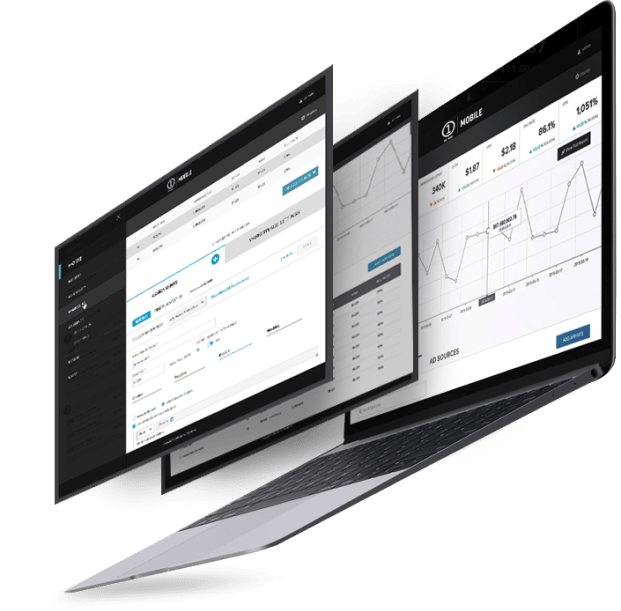
Governance outcomes that are transferable, maintainable, and future-proof
Unlike off-the-shelf ETL tools, our custom data governance solutions deliver deep engineering guarantees around metric alignment, automated quality gates, and security compliance — producing assets your team can own, operate, and evolve without ongoing vendor dependency.
Data Contracts Before Dashboards
Before building any visualization or model, we unify calculation logic, master data standards, and field mappings into a versioned data contract. Every metric definition is traceable — so anomalies can be attributed to either a genuine business shift or a source-data regression.
Tool-Agnostic BI Integration
Governed data assets are exposed via standardized APIs compatible with Power BI, Tableau, Looker, and other platforms — no vendor lock-in. Your investment goes into data quality, not redundant visualization licenses.
Phased Delivery with Milestone Validation
Implementation is scoped by data domain, with each phase delivering verifiable business outcomes and complete technical documentation. Deliverables, acceptance criteria, and timelines are confirmed at kickoff — supporting milestone-based billing and staged risk management.
Full Runbook & Operations Handoff
Every engagement ships with scheduler guides, exception-handling playbooks, alerting configurations, and a data dictionary. Your platform team can independently handle day-to-day operations, troubleshooting, and rule adjustments without calling the original engineers.
Automated Data Quality Gates
Critical tables run against a configurable quality rule set on every pipeline execution — failing data is automatically quarantined from downstream consumers and triggers alerts. Rule changes are audit-logged with timestamps, authors, and effective scope fully traceable.
Fine-Grained Access Control & Compliance
Row-level and column-level permissions with automatic PII masking. All data exports are audit-trailed, external reports support watermark tracing, and the permission model integrates with your enterprise IdP for unified identity governance.
Organizations sitting on data debt need this most
ML & AI Engineering Teams
Need high-volume, accurately labeled training data — manual curation can't keep pace with model iteration cycles
Manufacturing & Industrial
Sensor telemetry, quality inspection logs, and production records require rigorous cleaning before any meaningful analysis or predictive maintenance
Government & Public Sector
Multi-agency data consolidation, citizen record deduplication, and large-scale archive digitization under strict compliance requirements
Healthcare & Life Sciences
Structuring clinical records, lab results, and longitudinal patient data with anomaly detection, validation, and HIPAA-compliant governance
Financial Services & Insurance
Transaction deduplication, KYC data enrichment, and risk-data anomaly detection at institutional scale with full audit trails
Analytics & BI Teams
Looking to raise upstream data quality so downstream dashboards, reports, and ML features are finally trustworthy enough to act on
Technology Stack
Production-grade open-source and cloud-native components, assembled per engagement — zero single-vendor lock-in.








Let's Build Something Great Together
Whether you need a custom AI solution, legacy system modernization, or a production-grade data pipeline — we’re ready to scope, architect, and deliver.
Contact Us