Retrieval-Augmented Generation that grounds every answer in your actual data
Enterprise RAG Knowledge Base
Turn terabytes of unstructured enterprise documents into a conversational AI that retrieves, cites, and explains — with zero hallucination tolerance


Ground every AI response in verified enterprise data
Most LLMs hallucinate when asked about your internal processes, policies, or products — because they've never seen your data. Our RAG pipeline changes that. We ingest your documents, chunk them semantically, embed them into a vector store, and wire up a retrieval layer that fetches the most relevant passages before the LLM generates a single token. The result: precise, citation-backed answers drawn from your own source material — not the model's parametric memory. Every response links back to the original document, page, and paragraph.
Institutional knowledge is trapped and decaying
Your organization generates thousands of documents a year — SOPs, technical specs, regulatory filings, customer playbooks. Yet when someone needs an answer, they ping a Slack channel and hope the right person is online. Knowledge management isn't a nice-to-have; it's a bottleneck that directly impacts decision velocity, onboarding time, and operational resilience.
Documents exist but nobody can find them
Hundreds of SOPs, product specs, and compliance docs are scattered across SharePoint, Google Drive, Confluence, and email attachments — in mixed formats with inconsistent naming. Keyword search returns noise. Employees default to asking colleagues, and documents become write-only artifacts that never deliver ROI.
Onboarding takes weeks instead of days
New engineers and analysts spend their first month asking the same questions senior staff have answered dozens of times. There's no single entry point for institutional knowledge. The result: senior ICs lose focus time to interrupts, new hires ramp slowly, and every team transition creates a temporary productivity crater.
Critical expertise lives in people, not systems
Incident response playbooks, customer escalation patterns, and domain-specific decision logic exist only in the heads of tenured employees. When they leave or transfer, that knowledge disappears permanently. There's no knowledge graph, no structured capture — just tribal memory that degrades with every departure.
Cross-functional queries create multi-day delays
A straightforward question — 'What's our SLA for Tier 2 support tickets?' — triggers a chain of Slack messages, email forwards, and meeting requests across three departments. Information silos inflate coordination costs and slow decision-making, especially during incidents or time-sensitive initiatives.
Heterogeneous Formats Block Unified Indexing
Word, PDF, Excel, and PowerPoint files lack a common schema. Without format normalization, full-text search returns incomplete or misleading results.
Sensitive Data Can't Leave the Perimeter
Regulated content and core IP cannot be routed through third-party cloud services. Compliance constraints rule out most off-the-shelf AI search products.
Retrieve first, generate second — every answer is grounded and citable
Retrieval-Augmented Generation (RAG) fundamentally changes how LLMs interact with your data. Instead of relying on parametric memory, the system performs semantic search across your vector store, retrieves the top-k relevant passages, and feeds them as context to the LLM at inference time. Responses include inline citations with document IDs, page numbers, and confidence scores. No hallucinated facts. Full auditability.
Bridge the gap between static models and live data
Foundation models like GPT-4, Claude, and Llama are frozen at their training cutoff. RAG injects your current documents — updated policies, latest product specs, recent incident reports — at query time. The model reasons over fresh, authoritative data without costly fine-tuning cycles.
Eliminate hallucinations at the architecture level
By constraining generation to retrieved context, RAG structurally reduces confabulation. Every claim in the output maps to a source passage. Add guardrails like answer-grounding checks and abstention policies, and the system refuses to answer rather than fabricate — a non-negotiable for regulated industries.
Hybrid retrieval for maximum recall and precision
We combine sparse retrieval (BM25) with dense vector search (embedding similarity), then apply a cross-encoder re-ranker to surface the most relevant passages. This hybrid approach handles acronyms, domain jargon, and varied phrasing that single-method retrieval misses.
Build organizational trust in AI tooling
When users see cited sources alongside every answer, adoption accelerates. Teams stop second-guessing AI output and start relying on it for daily decisions. Trust is the prerequisite for enterprise-wide AI adoption — RAG delivers it by design.
Inject vertical domain expertise without retraining
Legal precedents, medical protocols, engineering tolerances, financial regulations — RAG lets general-purpose LLMs answer domain-specific questions with expert-level accuracy by retrieving from curated knowledge bases. No GPU clusters. No months-long fine-tuning. Just plug in your data.
Semantic chunking preserves document intent
Naive fixed-size chunking destroys context. We use semantic chunking strategies — section-aware splitting, hierarchical indexing, parent-child document relationships — to ensure retrieved passages carry complete, coherent meaning. Better chunks mean better answers.
A proven pipeline to deliver production-grade RAG
Our delivery methodology covers the full RAG lifecycle: corpus audit, ingestion pipeline, retrieval tuning, LLM integration, evaluation, and production ops. Each phase has defined deliverables, acceptance criteria, and go/no-go checkpoints. No black boxes — you see exactly what's being built and why.
Corpus Audit & Scoping
We inventory your document landscape — file types, volumes, update frequency, access patterns, and quality. We identify which corpora are RAG-ready, which need preprocessing, and define the target use cases with your stakeholders.
Deliverables
A scoping document with corpus inventory, data readiness assessment, architecture recommendations, timeline, and resource requirements.
Corpus Audit & Scoping
We inventory your document landscape — file types, volumes, update frequency, access patterns, and quality. We identify which corpora are RAG-ready, which need preprocessing, and define the target use cases with your stakeholders.
Deliverables
A scoping document with corpus inventory, data readiness assessment, architecture recommendations, timeline, and resource requirements.
Data Ingestion & Chunking
We build an ingestion pipeline that handles PDFs, Word, Excel, HTML, Markdown, and scanned documents (via OCR). Documents are parsed, cleaned, semantically chunked, and embedded into your vector store with full metadata tagging.
Deliverables
A fully indexed vector store with semantically chunked documents, metadata filters, and automated ingestion for new content.
Data Ingestion & Chunking
We build an ingestion pipeline that handles PDFs, Word, Excel, HTML, Markdown, and scanned documents (via OCR). Documents are parsed, cleaned, semantically chunked, and embedded into your vector store with full metadata tagging.
Deliverables
A fully indexed vector store with semantically chunked documents, metadata filters, and automated ingestion for new content.
Retrieval Pipeline Engineering
We configure hybrid retrieval (BM25 + dense vectors), tune similarity thresholds, implement re-ranking models, and build query transformation layers (HyDE, query decomposition) to maximize recall and precision on your specific data.
Deliverables
A retrieval pipeline that consistently surfaces the right passages — benchmarked against your domain-specific test queries.
Retrieval Pipeline Engineering
We configure hybrid retrieval (BM25 + dense vectors), tune similarity thresholds, implement re-ranking models, and build query transformation layers (HyDE, query decomposition) to maximize recall and precision on your specific data.
Deliverables
A retrieval pipeline that consistently surfaces the right passages — benchmarked against your domain-specific test queries.
LLM Integration & System Build
We wire the retrieval pipeline to your chosen LLM (OpenAI, Anthropic, open-source via Ollama), build the generation layer with citation formatting, and expose the system via REST APIs for integration with Slack, Teams, or your internal tools.
Deliverables
A working Q&A system with citation-backed answers, accessible through your team's existing communication tools.
LLM Integration & System Build
We wire the retrieval pipeline to your chosen LLM (OpenAI, Anthropic, open-source via Ollama), build the generation layer with citation formatting, and expose the system via REST APIs for integration with Slack, Teams, or your internal tools.
Deliverables
A working Q&A system with citation-backed answers, accessible through your team's existing communication tools.
Evaluation & Tuning
We run systematic evaluations — retrieval recall, answer faithfulness, relevance scoring — using RAGAS-style metrics. We iterate on chunk sizes, retrieval parameters, prompt templates, and re-ranking models until quality targets are met.
Deliverables
Quantified performance benchmarks and a tuned system that meets your accuracy and latency requirements.
Evaluation & Tuning
We run systematic evaluations — retrieval recall, answer faithfulness, relevance scoring — using RAGAS-style metrics. We iterate on chunk sizes, retrieval parameters, prompt templates, and re-ranking models until quality targets are met.
Deliverables
Quantified performance benchmarks and a tuned system that meets your accuracy and latency requirements.
Deployment & Ongoing Ops
We deploy to your infrastructure (on-prem, VPC, or private cloud), set up monitoring dashboards, configure alerting, and establish a feedback loop for continuous knowledge base updates and retrieval quality improvement.
Deliverables
A production-grade system with observability, automated re-indexing, and a clear runbook for your ops team.
Deployment & Ongoing Ops
We deploy to your infrastructure (on-prem, VPC, or private cloud), set up monitoring dashboards, configure alerting, and establish a feedback loop for continuous knowledge base updates and retrieval quality improvement.
Deliverables
A production-grade system with observability, automated re-indexing, and a clear runbook for your ops team.
From keyword search to intelligent knowledge retrieval
RAG transforms how organizations access institutional knowledge. Instead of searching folders and hoping for the right result, users ask natural language questions and get precise, cited answers in seconds. These six scenarios represent the highest-impact deployments we see across enterprise and government clients.
Policy & Regulatory Compliance
Compliance teams waste hours tracing policy clauses across multiple document versions. With section-level indexing and version-aware retrieval, users locate exact paragraphs via natural language queries. Responses include document IDs, section numbers, and effective dates — making internal audits and regulatory spot-checks fast and defensible.
SOP & Process Guidance
Operational procedures evolve faster than training materials can keep up. Helpdesks drown in repetitive how-to questions. By converting flowcharts, forms, and process documents into queryable knowledge, the system delivers step-by-step guidance on demand. Unanswered queries surface documentation gaps automatically.
Technical Documentation & Product Specs
When product manuals, API docs, and release notes are maintained independently, pre-sales engineers and support teams struggle to distinguish version-specific behavior. Unified indexing with model/version metadata filters lets users query precise feature boundaries — reducing misconfiguration, incorrect customer guidance, and escalation loops.
Contract & Project Document Retrieval
Bid documents, change orders, and amendment histories scatter across email threads and cloud drives. Project-level clustering with timeline indexing lets stakeholders locate the exact revision they need. Legal and project management align on scope boundaries with a clear, auditable document trail.
Employee Onboarding & Enablement
No new hire absorbs every policy in week one, and mentors give inconsistent guidance under time pressure. A RAG-powered onboarding assistant handles the long tail of policy questions with cited, consistent answers — freeing senior staff to focus on contextual coaching. Unanswered queries feed back into the knowledge base, so coverage grows organically.
Cross-Team Knowledge Alignment
Different departments use different terminology for identical concepts, and key decisions get lost in forwarded email chains. By indexing finalized documents with ownership metadata and scope tags, the system delivers consistent, version-referenced answers across org boundaries — reducing rework, miscommunication, and duplicated effort.
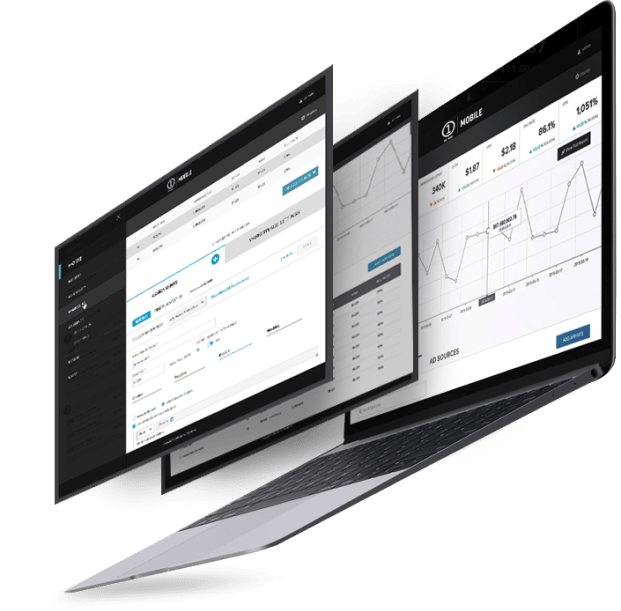
Every answer is grounded, access-controlled, and auditable
Off-the-shelf RAG products force you into their data model, their chunking strategy, and their permission boundaries. Custom-built RAG adapts to your document structure, integrates with your identity provider, and gives you full control over retrieval logic — delivering measurable advantages in accuracy, security, and total cost of ownership.
Domain-Optimized Semantic Pipeline
Custom tokenization, entity recognition, and embedding strategies tuned to your proprietary terminology and document structures. Unlike generic RAG platforms, every component — from chunking to re-ranking — is optimized for your specific corpus, delivering significantly higher retrieval precision on domain-specific queries.
Granular, Role-Based Access Control
Document-level and passage-level access boundaries defined by org structure, role, and project scope. Sensitive documents can be configured for retrieval-only with no raw text surfaced. The permission layer integrates with your existing IdP (Okta, Azure AD, LDAP) for unified, zero-overhead management.
On-Premise / VPC Deployment with Full Data Isolation
The entire stack — vector store, embedding models, LLM inference — deploys within your network perimeter. No data leaves your environment. When external LLM APIs are required, a PII-redaction gateway transmits only de-identified fragments, satisfying SOC 2, HIPAA, and GDPR data residency requirements.
API-First Architecture for Seamless Integration
RESTful APIs and SDKs for rapid integration with Slack, Teams, your internal portal, or any system with an HTTP endpoint. A unified gateway handles authentication, rate limiting, and audit logging. Adding new integration surfaces requires configuration changes, not backend refactoring.
Incremental Indexing & Continuous Improvement
The knowledge base supports batch and tag-based incremental index updates — no full reindexing required. Built-in miss-rate analytics, retrieval quality dashboards, and user feedback loops let you proactively identify and fill knowledge gaps as your corpus evolves.
Hybrid Retrieval with Cross-Encoder Re-Ranking
Combines BM25 sparse retrieval with dense vector search, plus a cross-encoder re-ranking stage for result refinement. Maintains stable recall and precision across acronyms, abbreviations, and varied phrasing — effectively reducing both false positives and missed results compared to single-method approaches.
Purpose-built for knowledge-intensive organizations
Organizations with large document corpora, high employee turnover, or frequent cross-functional collaboration feel the pain most acutely: slow information retrieval, inconsistent answers, and expensive ramp-up cycles. An enterprise RAG system converts scattered institutional knowledge into a single, queryable, citable source of truth. These industries consistently see the fastest time-to-value.
Manufacturing
Equipment SOPs, QC standards, and process specifications are extensive — field teams need instant, accurate answers on the shop floor
Government & Public Sector
Regulatory frameworks, service procedures, and policy clauses are dense and frequently updated — precise retrieval is non-negotiable
Sales & GTM Teams
Product positioning, pricing rules, competitive intel, and battlecards need to be instantly accessible to every rep in the field
Healthcare / Legal / Financial Services
Highly regulated, knowledge-intensive verticals where accuracy is mandatory and citation-backed answers reduce liability
Engineering & Construction
Contracts, blueprints, and regulatory filings are voluminous — high turnover makes structured knowledge retention a strategic priority
Retail & Multi-Location Operations
Brand standards, training materials, and operational playbooks require unified, consistent access across hundreds of locations
Technology Stack
Production-grade, open-source-first stack with no vendor lock-in. Components are selected per engagement based on your infrastructure and compliance requirements.


Let's Build Something Great Together
Whether you need a custom AI solution, legacy system modernization, or a production-grade data pipeline — we’re ready to scope, architect, and deliver.
Contact Us